Kioto en 3 días: itinerario para tu primera visita
July 14, 2026 · 8 min read
Tres días no bastan para Kioto, pero sí para que te enamores de la ciudad. Con más de mil templos y un ritmo que premia las mañanas tranquilas, el truco para una primera visita es agrupar cada día en una zona, adelantarte a las multitudes cuando puedas y dejar hueco para perderte sin rumbo. Este es un plan de 3 días probado y pensado para ir a pie, con los horarios que marcan la diferencia.
Cómo aprovechar este itinerario por Kioto
Este plan agrupa las paradas por zonas para que no acabes cruzando la ciudad de un lado a otro. Cada día se mueve, más o menos, por una parte de Kioto (este, oeste, norte), así los trayectos son cortos y tus pies lo agradecen.
Antes de nada, unos apuntes:
- Las mañanas son tu mejor arma. Los lugares más conocidos de Kioto se llenan de verdad a media mañana. El consejo más importante de todo este artículo: madruga.
- Hazte con una tarjeta IC (Suica o ICOCA) para pagar el autobús y el tren solo con acercarla. Los autobuses de Kioto cubren los tramos a los que el metro no llega.
- Ponte un calzado cómodo. Esta es una ciudad para andar, y las cuestas de los templos no perdonan.
¿Prefieres tenerlo como un plan vivo y editable en el móvil, con mapas sin conexión y la opción de reorganizarlo sobre la marcha? Mira el plan de Kioto en Travolp o descárgate la app. Y si prefieres que una IA te prepare una versión a tu medida, primero lee cómo planear un viaje con IA.
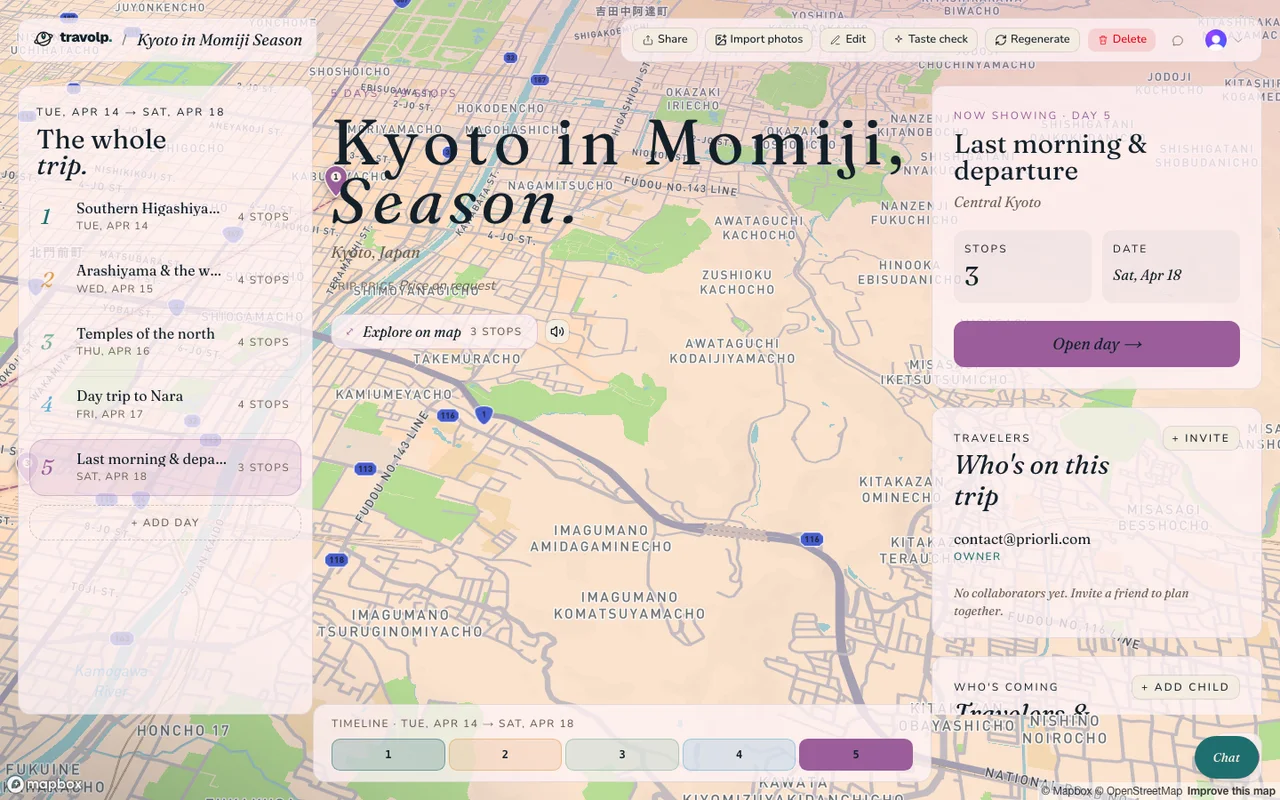
El mismo plan dentro de Travolp: los días agrupados por barrio, cada parada situada en el mapa y reordenable.
Día 1: Kioto sur y este: Fushimi Inari y Kiyomizu-dera

El primer día toca dos de los grandes símbolos de Kioto. En los dos, madrugar se nota más que en casi cualquier otro rincón de la ciudad.
Mañana: santuario de Fushimi Inari
Empieza aquí, y empieza pronto, lo ideal es llegar entre las 7:30 y las 8:00 de la mañana. Fushimi Inari es el santuario del túnel interminable de torii bermellón que sube serpenteando por la montaña. Es gratis, está abierto las 24 horas y se disfruta mejor cuando está tranquilo.
- La subida completa hasta la cima y la vuelta lleva entre 2 y 3 horas. La mayoría da media vuelta en el cruce de Yotsutsuji (entre 30 y 45 minutos de subida), donde ya hay una vista estupenda, y es una opción perfectamente válida.
- A las 10 de la mañana ya vas pegado a la gente cerca de la entrada. Cuanto más subes, menos gente encuentras.
Tarde: Kiyomizu-dera y las callejuelas de Higashiyama
Desde Fushimi Inari, sube hacia el norte, al barrio de Higashiyama. Come algo por Gion o en las callejuelas justo debajo del templo.
- Kiyomizu-dera es el templo de madera levantado sobre pilotes, con esa terraza asomada a la ladera que ha salido en mil fotos. Con la luz de última hora de la tarde es espectacular.
- Las calles de acceso, Sannenzaka y Ninenzaka, son cuestas empedradas conservadas tal cual, llenas de tiendas de dulces, casas de té y artesanía. Deja tiempo para pasear sin más plan que ese.
Noche: Gion
Cierra el día en Gion, el barrio de las geishas. Camina por la calle Hanamikoji al anochecer, cuando las casas machiya de madera brillan bajo los farolillos y puede que veas pasar a una geiko o una maiko camino de alguna cita. (Sé respetuoso: en las calles privadas se pide que no les hagas fotos.)
Día 2: Kioto oeste: el bambú de Arashiyama y los monos
El segundo día va hacia el oeste, a Arashiyama, un barrio a medio camino entre el campo y la ciudad, con bambú, río y templos de montaña. Se tarda un rato en llegar, así que resérvale el día entero.
Mañana: el bosque de bambú de Arashiyama
Otra vez lo mismo: ve pronto. El bosque de bambú es un camino corto que parece de otro mundo, con tallos verdes altísimos a los dos lados, pero es diminuto, así que a media mañana se convierte en un río lento de gente. Si llegas entre las 8:00 y las 8:30, puede que tengas un tramo casi para ti solo.
- Justo al lado del bosque está Tenryū-ji, un templo zen con uno de los jardines más bonitos de Japón y la montaña de fondo. Merece la pena pagar la entrada.
Mediodía: el parque de los monos de Iwatayama y el río
- Cruza el famoso puente Togetsukyo para ver el desfiladero del río Hozu.
- Si te apetece subir, el parque de los monos de Iwatayama compensa una caminata empinada de 20 minutos con macacos salvajes y una vista panorámica de todo Kioto.
- Come junto al río y baja el ritmo: en Arashiyama conviene quedarse un rato de más.
Tarde: Okochi Sanso o un paseo por Sagano
La villa Okochi Sanso (antigua casa de un actor de películas de samuráis) tiene unos jardines tranquilísimos, y la entrada incluye un té matcha. Es el contrapunto perfecto después del gentío de la mañana.
Día 3: Kioto norte: Kinkaku-ji y el Camino del Filósofo

Deja el oro para el final. El tercer día junta el templo más fotografiado de Kioto con uno de sus paseos más bonitos.
Mañana: Kinkaku-ji, el Pabellón Dorado
Kinkaku-ji, el Pabellón Dorado, es un templo de tres plantas recubierto de pan de oro que se refleja entero en el estanque de delante. Es pequeño y no se puede entrar, así que con 45 o 60 minutos te sobra tiempo. Ve a la hora de apertura (las 9:00) para fotografiarlo antes de que lleguen los autobuses de turistas.
- Si te quedan ganas de más, muy cerca está Ryōan-ji, con el jardín de rocas más famoso de Japón: quince piedras sobre gravilla rastrillada que demuestran que menos es más.
Tarde: el Camino del Filósofo y Ginkaku-ji
Muévete hacia las colinas del este para recorrer el Camino del Filósofo, un sendero de piedra junto a un canal bordeado de cerezos (mágico en primavera, tranquilo en cualquier época), con pequeños templos, cafés y tiendas repartidos por el camino.
- En el extremo norte está Ginkaku-ji, el Pabellón de Plata, que en realidad nunca llegó a cubrirse de plata, pero tiene unos jardines de musgo y arena realmente fuera de serie. Un cierre perfecto, pensado para la calma.
Noche: cena en Pontocho
Termina el viaje en Pontocho, el callejón estrecho iluminado con farolillos junto al río Kamo, lleno de restaurantes que van del kaiseki al yakitori. En los meses de más calor, muchos locales abren sus terrazas sobre el río (kawayuka). Una buena manera de cerrar la última noche.
Consejos prácticos para no perder el día en Kioto
- Mejor época para ir: la primavera (finales de marzo y abril, con los cerezos en flor) y el otoño (noviembre, con los colores del follaje) son cuando más gente hay. El verano es húmedo y caluroso, el invierno es fresco y tranquilo.
- Transporte: entre autobuses y trenes llegas a todas partes, y la tarjeta IC te lo pone fácil. Un taxi merece la pena cuando estás cansado y lejos de una parada.
- Horario de los templos: la mayoría cierra entre las 4:30 y las 5:00 de la tarde, así que conviene concentrar las visitas por la mañana y a primera hora de la tarde.
- Normas de comportamiento: guarda silencio dentro de los templos, quítate los zapatos donde se indique y no bloquees las callejuelas estrechas para hacer fotos.
- Efectivo: sigue siendo útil en tiendas pequeñas y santuarios, aunque cada vez se acepta más la tarjeta.
Haz tuyo este plan de Kioto

Tres días, tres barrios y madrugar: esa es la fórmula. Pero la mejor versión de este viaje es la que se ajusta a ti: puede que prefieras más comida y menos templos, o un ritmo más tranquilo si vas con niños.
Para eso sirve un compañero de viaje con IA. Con Travolp puedes coger un plan de Kioto, contarle tus gustos y darle forma charlando con él, y luego llevarlo contigo con mapas sin conexión (así el mapa funciona aunque no tengas cobertura en las colinas de los templos) y usar Lens para identificar las esculturas y obras de arte con las que te cruces. ¿Tienes curiosidad por cómo funciona la parte de planificación? Empieza por cómo planear un viaje con IA.
Cuando quieras dar el paso, echa un vistazo al plan de Kioto y descárgate Travolp para hacerlo tuyo.