App di viaggio con IA nel 2026: quale regge un cambio di programma?
July 14, 2026 · 8 min read
Hai pochi giorni a disposizione e una visita già prenotata. L'itinerario suggerito sembra ragionevole, finché decidi di uscire più tardi e togliere una tappa. Il punto non è ottenere un altro bel testo. Devi ritrovare la prenotazione al suo posto, con un programma che abbia ancora senso. Per un viaggio breve sceglierei l'app che gestisce bene questa modifica, anche a costo di una prima risposta meno brillante.
Qui confrontiamo Travolp, Wanderlog e Mindtrip tramite le loro fonti ufficiali, controllate il 15 settembre 2026 (2026-09-15). L'articolo è pubblicato da Travolp. Non è una classifica indipendente né il resoconto di prove effettuate sui dispositivi. Distinguiamo le funzioni descritte dagli editori dai controlli che puoi fare tu. Versioni e condizioni di acquisto cambiano: verifica quelle del tuo account prima di pagare.
Inizia dalla prenotazione che non vuoi spostare

«App con IA» e «organizzatore manuale» non sono categorie sufficienti. Wanderlog ha un assistente IA. Mindtrip propone la pianificazione condivisa e un'app iOS. Descriverli come strumenti che usi solo alla scrivania nasconderebbe informazioni utili a chi deve scegliere un'app per il viaggio.
Prendi una giornata a Roma con una visita a orario fisso e una pausa pranzo lunga. Dopo aver richiesto il programma, confronta l'appuntamento con la conferma dell'organizzatore. Guarda anche il tempo necessario tra le tappe. Una risposta precisa nel tono può comunque contenere una giornata troppo piena. La nostra guida su come verificare un itinerario creato dall'IA spiega cosa controllare prima di spendere sulla base di un suggerimento.
Poi segui il percorso delle informazioni. Dove finiscono i luoghi proposti? Come ritrovi le prenotazioni? Se un amico cambia una tappa, cosa compare sul tuo telefono? E cosa rimane leggibile senza rete? Valuta ciascuna operazione. La stessa app può svolgerle tutte con limiti diversi, che il primo itinerario non mette in evidenza.
Le funzioni documentate, a confronto
Questa tabella riassume le pagine ufficiali consultate il 15 settembre 2026. La dicitura «non verificato qui» riguarda il perimetro della nostra ricerca, non l'assenza di una funzione. Non abbiamo stabilito quale prodotto sia più affidabile o dia i consigli migliori. Il confronto aiuta a scegliere cosa provare per primo.
| Operazione | Wanderlog | Mindtrip | Travolp |
|---|---|---|---|
| Trasformare suggerimenti IA in un viaggio | L'assistente aggiunge luoghi al piano | La chat crea itinerari personalizzabili | La scheda annuncia generazione giorno per giorno e ripianificazione |
| Organizzare con altre persone | Collaborazione in tempo reale | Pianificazione condivisa e chat di gruppo | Viaggi di gruppo condivisi |
| Riunire le prenotazioni | Importazione delle prenotazioni | Caricamento di ricevute e conferme; PDF tramite Start Anywhere | Dettagli dell'importazione non valutati qui |
| Usare il viaggio sul telefono | App mobile collegata dal sito | App iOS annunciata | Scheda Android verificata |
| Leggere senza connessione | Ambito preciso non verificato qui | Ambito preciso non verificato qui | Mappe offline annunciate; accesso al viaggio salvato spiegato sotto |
Fonti: assistente IA di Wanderlog, presentazione di Mindtrip e scheda Google Play di Travolp. Sono descrizioni dei produttori. Un nome confermato non dimostra la qualità quotidiana della funzione o la parità su ogni dispositivo. Per questo alla lettura della tabella deve seguire una prova legata al tuo itinerario.
Wanderlog e Mindtrip usano già l'IA

Se hai già prenotato parte del viaggio, guarda come un servizio combina ciò che hai scelto con nuove proposte. L'assistente di Wanderlog si trova dentro il piano di viaggio e permette di aggiungere i luoghi suggeriti senza passare a un documento separato. La stessa pagina ufficiale descrive importazione delle prenotazioni e collaborazione in tempo reale. Non sarebbe corretto proporre Wanderlog soltanto come alternativa manuale a un'app con IA.
Mindtrip descrive la creazione di itinerari attraverso una conversazione, insieme a foto e mappe. Il sito elenca pianificazione condivisa e chat di gruppo. Ricevute e conferme si caricano per riunire i dettagli delle prenotazioni; Start Anywhere accetta anche schermate e PDF. È annunciata un'app iOS. L'aspetto visivo del servizio non significa che serva un computer per usarlo.
Queste informazioni giustificano una prova, non assegnano un vincitore. Chiedi a entrambi di mantenere la visita prenotata, eliminare una tappa facoltativa e lasciare tempo per mangiare. Apri il programma salvato. La prenotazione è ancora corretta? Chi viaggia con te vede la stessa versione? Conta gli interventi necessari, senza premiare una risposta solo perché suona bene.
Travolp prima e durante il viaggio, con limiti chiari
Travolp è pensato per preparare il viaggio e assisterti durante il soggiorno. La descrizione su Google Play, controllata il 15 settembre 2026, annuncia generazione degli itinerari, ripianificazione, riepiloghi del mattino e mappe offline. Cita inoltre i viaggi di gruppo e Lens per identificare i monumenti. È il suo uso previsto; non dimostra che le app concorrenti smettano di essere utili alla partenza.
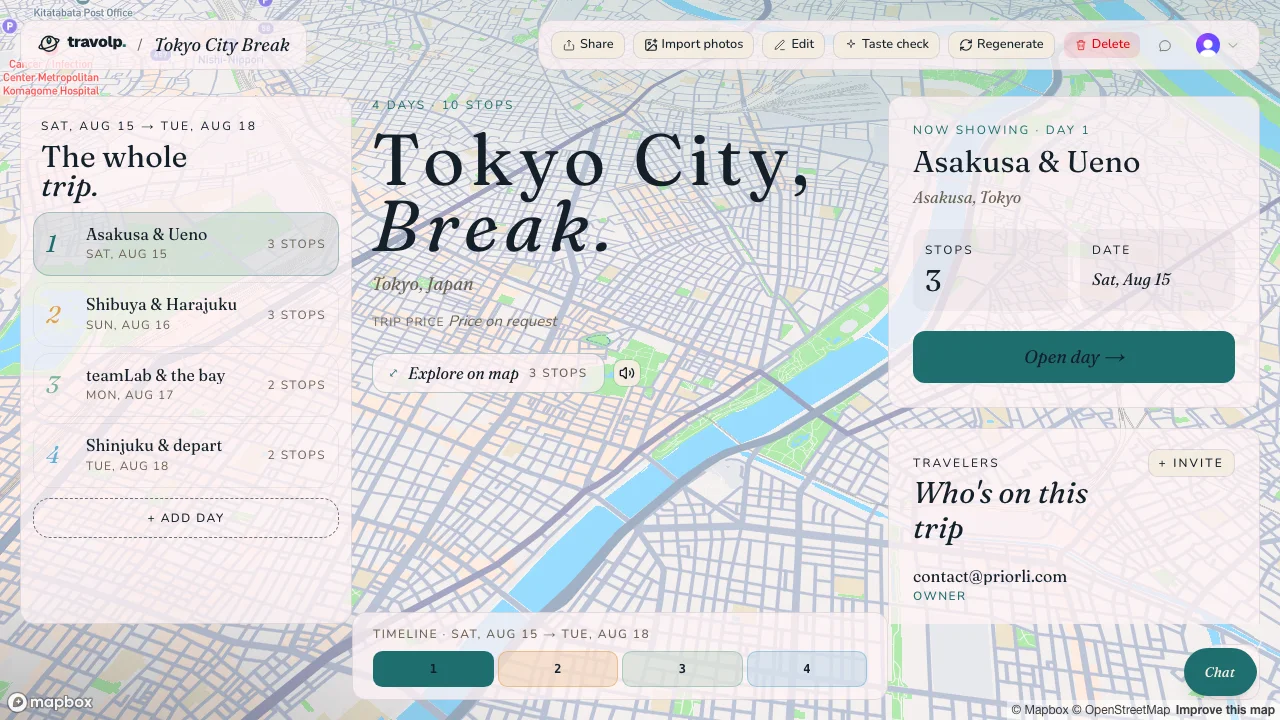
Illustrazione del prodotto mantenuta dall'articolo originale. Non documenta una nuova prova comparativa.
Offline significa anzitutto consultare informazioni già salvate. Nell'app mobile prepara la cache del viaggio e scarica le aree di mappa necessarie prima di partire. Generare un itinerario con l'IA e usare la chat IA richiede internet. Il fatto che tu riesca a leggere il programma non rende l'assistente utilizzabile senza rete. Segui la guida per usare i tuoi itinerari offline, poi verifica tutto sul tuo telefono.
Anche «puoi iniziare gratis» ha un confine. Le azioni IA consumano una disponibilità di crediti, e la scheda dello store indica acquisti in-app. Controlla saldo e condizioni mostrate nell'app. Non indichiamo una quantità fissa gratuita o un prezzo che non abbiamo verificato per il tuo account. Se prevedi diverse revisioni del programma, osserva il consumo già durante la prova.
Lingue regionali e supporto per Apple Watch
Al 15 settembre 2026, Travolp supporta 16 impostazioni regionali nell'app. Ci sono inglese americano e britannico, portoghese brasiliano ed europeo, cinese semplificato e tradizionale. Le altre opzioni sono vietnamita, giapponese, svedese, tedesco, finlandese, francese, italiano, spagnolo, danese e olandese. Non sono 16 lingue distinte.
I menu in italiano non garantiscono che tutte le descrizioni generate siano altrettanto chiare. Prova la destinazione e le richieste che userai davvero. La lingua dell'interfaccia e la qualità delle risposte IA sono aspetti separati. Lo stesso vale per ciò che leggeranno i tuoi compagni.
Per Apple Watch occorre distinguere un riepilogo da un'app dedicata. Apple spiega che, a partire da iOS 18 e watchOS 11, un'attività in tempo reale dell'iPhone può comparire nella Raccolta smart, o Smart Stack, su un Apple Watch collegato anche senza un'app watchOS. Quella scheda non equivale a un'app che apri e usi direttamente sull'orologio.
In questo confronto non abbiamo verificato il rilascio di un'app Travolp autonoma per Apple Watch. Non sceglierla contando su questa ipotesi. Se l'accesso dal polso è importante per te, controlla la schermata effettiva sulla tua versione installata e sul tuo orologio. La presenza di codice o di una schermata del telefono non basta a provare una funzione distribuita.
Prova una giornata prima di trasferire tutto

Usa un giorno che rappresenti il tuo viaggio breve. Inserisci la visita già fissata e una pausa che non vuoi sacrificare. Se parti con amici, coinvolgine uno. La prova serve a far emergere le difficoltà mentre puoi ancora scegliere un altro strumento senza riscrivere l'intero soggiorno.
- Salva un programma breve con l'alloggio e una prenotazione fissa. Verifica indirizzo e data sulla conferma originale.
- Invita un compagno a cambiare una tappa facoltativa. Riaprite il programma sui due telefoni e confrontate il risultato salvato. La guida per organizzare un viaggio di gruppo aiuta a distribuire le modifiche.
- Prepara l'accesso offline seguendo le istruzioni dell'app. Attiva la modalità aereo, spegni il Wi-Fi e riapri la giornata, gli indirizzi e l'area di mappa scaricata. Annota che cosa riesci davvero a consultare.
- Torna online e chiedi di iniziare un'ora più tardi, mantenendo la prenotazione. Controlla l'ordine aggiornato delle tappe e gli eventuali crediti IA consumati.
È un test da eseguire, non un elenco di risultati che sosteniamo di avere ottenuto. Se qualcosa non funziona, cerca la causa. Una mappa rimasta a metà download non dimostra che il servizio non offra mappe scaricabili. Ripeti il controllo corretto prima di escluderlo.
Decidi quale intervento vuoi fare in viaggio
Con pochi giorni liberi, correggere continuamente gli orari può pesare più di un'interfaccia meno elegante. Un'altra persona potrebbe preferire la facilità di condivisione. Non c'è bisogno di attribuire un voto assoluto a tutto: devi sapere quale inconveniente sei disposto a gestire tu, su quel viaggio.
Per ogni app annota l'operazione, quello che hai visto, un eventuale acquisto richiesto e ciò che hai dovuto sistemare. Riusa la stessa giornata nel confronto successivo. Così non confronti un programma semplice con un itinerario pieno di vincoli e non scambi una funzione pubblicizzata per un comportamento già verificato.
Travolp è un candidato se ti serve il suo approccio alla preparazione e all'assistenza durante il soggiorno. Wanderlog e Mindtrip meritano posto nello stesso confronto. Prima di inserire tutte le altre giornate, assicurati di recuperare i dati essenziali della prima. Devi sapere cosa richiede rete e cosa consuma altri crediti IA. Meglio scoprirlo prima di chiudere la valigia.